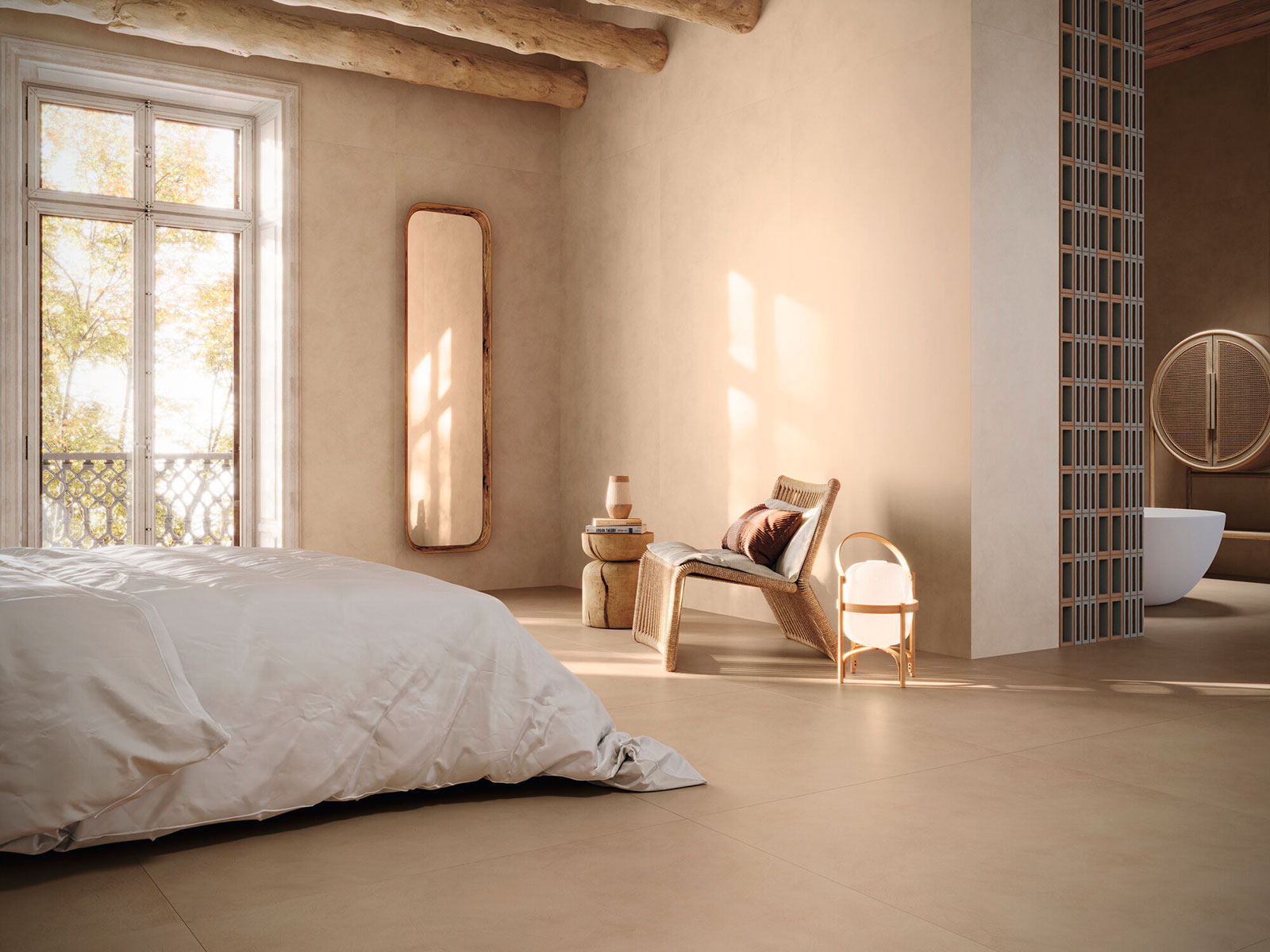
Few materials carry as much warmth as terracotta. Its orange-red earth tones, its handcrafted soul and its Mediterranean character have made the terracotta tile a favourite of interior designers looking for spaces that feel lived-in and welcoming.
The good news is that today you can enjoy that warmth without the demanding upkeep of natural clay, thanks to terracotta-look porcelain. In this guide we cover where terracotta works best, how to combine it, and which collections capture its essence.
Terracotta, literally “baked earth”, is one of the oldest building materials in the world: natural clay shaped by hand and fired in a kiln. Each terra cotta tile shows slight variations in tone and texture, and that irregularity is precisely its charm, the opposite of a flat, mass-produced surface.
From Tuscan farmhouses to Mexican haciendas with their saltillo floors, every Mediterranean and warm-climate culture has its own version of the same idea: bringing the earth indoors.
Natural clay is beautiful, but it asks for commitment:
Terracotta-look porcelain tiles reproduce the tones and texture of fired clay with the performance of technical ceramic: zero sealing, total resistance to stains and moisture, compatibility with underfloor heating, and formats from small handcrafted pieces to large slabs.
That is exactly the spirit of two APE Grupo collections. Argillae, a love song to clay, draws its six shades from the earth itself, from the white Neve to the red Coral and the brown Terra. And Grunge interprets rustic clay with a more urban, worn character. For walls, glazed terracotta pieces add shine and depth to the same earthy palette.
A terracotta floor instantly warms a living room, especially against white walls and natural fibres. Large formats calm the surface for contemporary homes; classic square or hexagonal pieces lean into the rustic soul.
Terracotta kitchen tiles pair beautifully with white cabinets and wood. And the terracotta backsplash, unthinkable in porous natural clay next to a hob, becomes perfectly practical in its porcelain version: the warmth stays, the grease wipes off.
Outdoor terracotta tiles extend the same earthy palette to terraces and porches. In porcelain with anti-slip finishes, they resist frost, sun and rain, something natural clay struggles with, and let the floor flow from the kitchen to the garden without a visual break.
Part of terracotta’s appeal is its handcrafted feel, and that survives the jump to porcelain when the collection is designed with care: tone variations between pieces, soft surface texture and small-format options that catch the light.
That is the territory of the existing small-format collections in the catalogue, from the Mediterranean spirit of Menorca to glazed wall pieces that add a vibrant, artisanal accent to murals and feature walls.
Natural clay does, regularly. Terracotta-look porcelain does not: it never needs sealing and ordinary cleaning products are enough.
Very much so. The return to natural materials and warm palettes has put terracotta back at the centre of interior design, now in versions that fit modern kitchens and minimalist homes as naturally as rustic ones.
In their porcelain version, yes: with anti-slip finishes they handle terraces, porches and pool surrounds, and they resist frost, something natural clay cannot promise.
The terracotta tile has lost none of its power to make a home feel warm; it has simply changed material. With Argillae and Grunge, APE Grupo brings the clay to every room of the house with the freedom of formats, the resistance and the easy care of porcelain.




 Return