Few materials carry the weight of marble in interior design. Marble tiles bring that same presence to walls and floors with a promise the natural stone cannot make: all the elegance, none of the upkeep. In this guide we cover how to choose them, the colours that work best in each space, and the collections that interpret every shade of the stone.
Natural marble is beautiful, but it plays at a disadvantage in daily life. It is porous, so water, limescale and cosmetics leave marks over time; it needs periodic sealing and pH-neutral cleaners; and slabs are heavy and expensive to install.
Marble-look porcelain tiles solve all of it. They reproduce the veining of the stone with remarkable fidelity, absorb virtually no water, shrug off ordinary cleaning products and never need sealing. That is why most marble bathrooms and kitchens in current projects are actually porcelain: the eye sees Carrara, the routine feels like ceramic.
The fastest way to choose is by colour, because each shade sets a different mood:
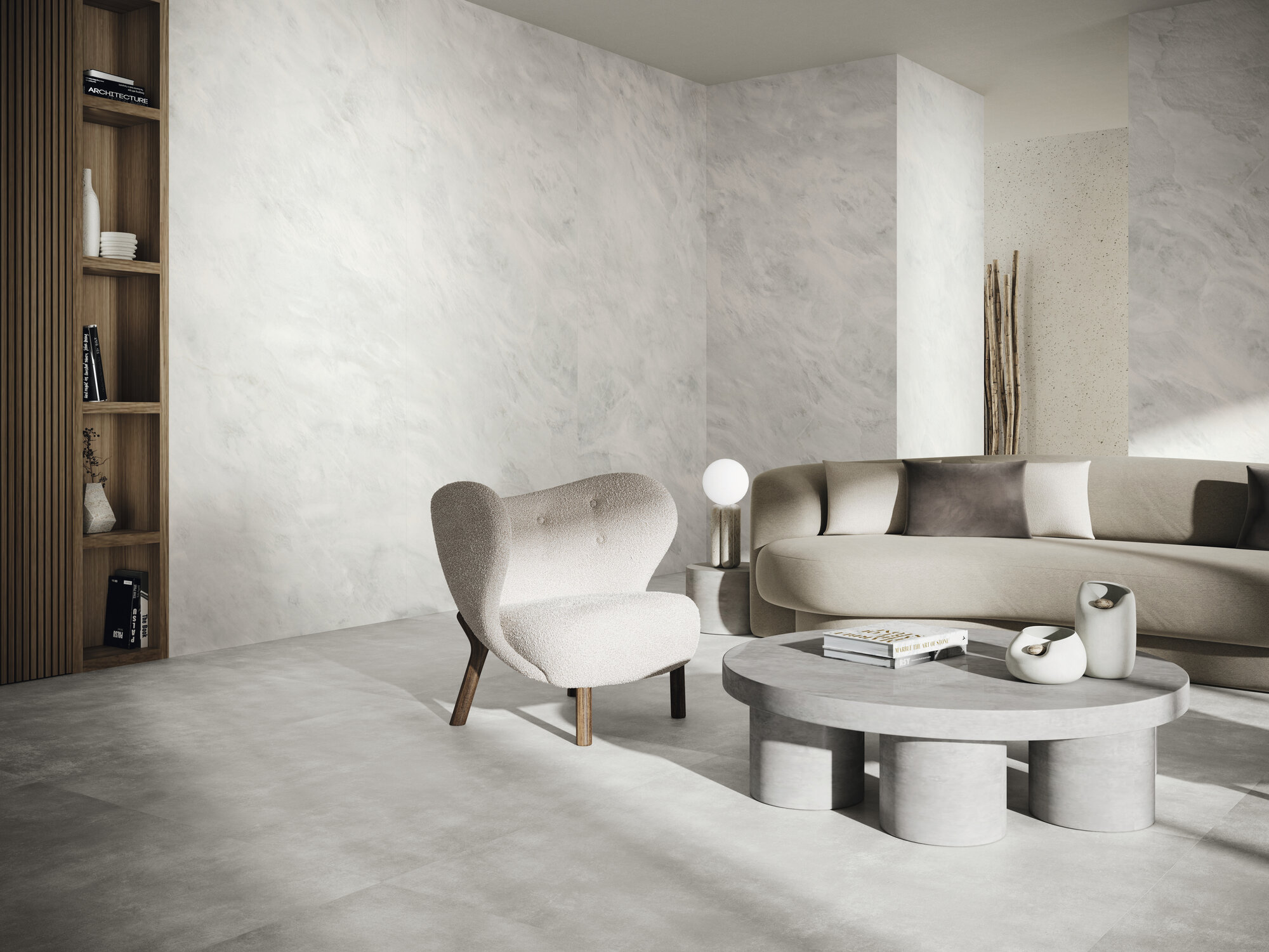
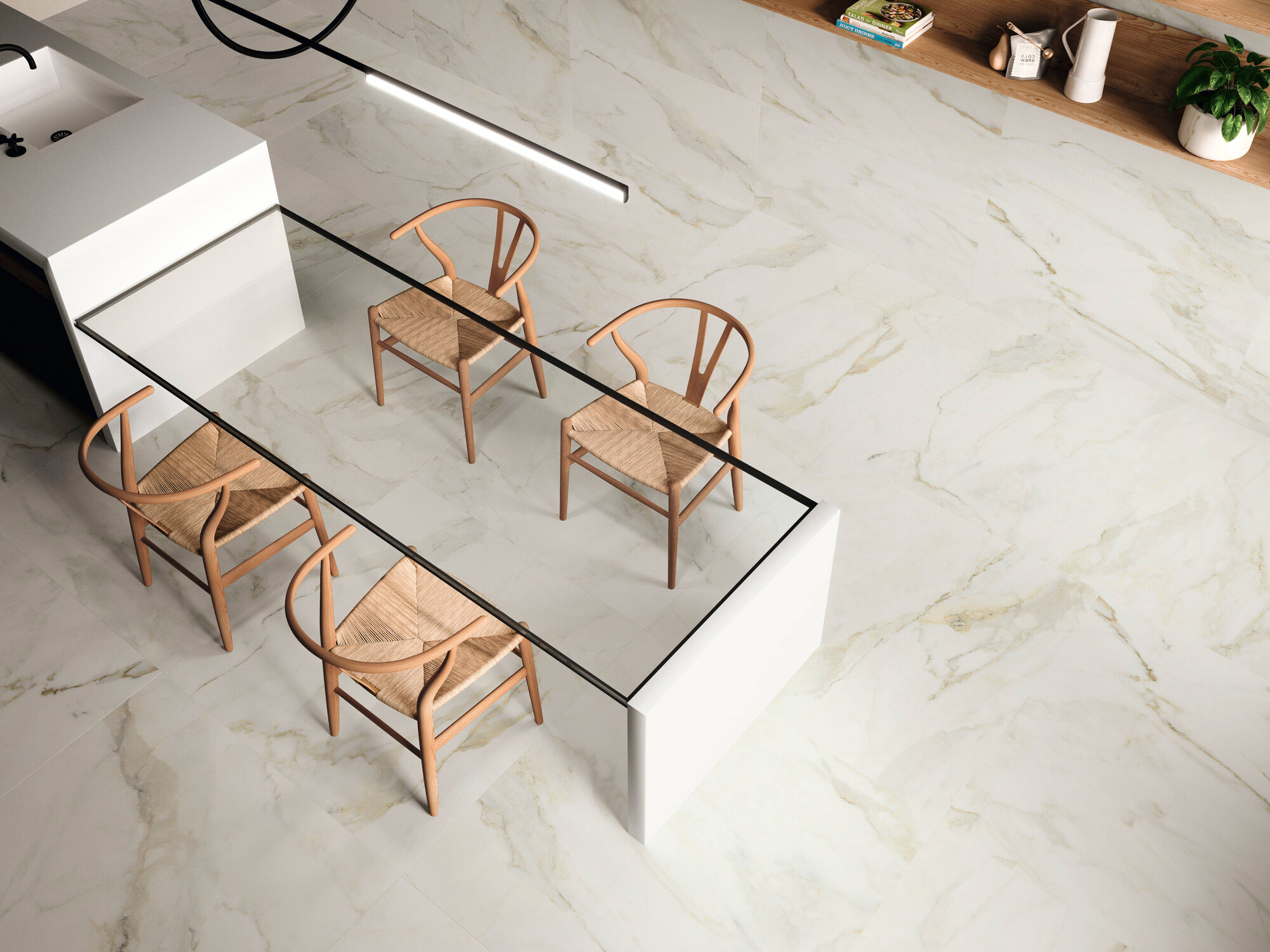
On the floor, marble asks for size. Large formats such as 60×120 and 120×120 let the veining flow with barely any grout lines, bringing the result closer to a natural slab. A polished finish multiplies the light and suits living rooms and bathrooms; a matt finish is the safer, more contemporary choice for kitchens and busy hallways, where shine would show wear and footprints sooner.
One practical note: porcelain marble floor tiles handle underfloor heating and heavy traffic without the etching and staining natural stone suffers, which is why they have become the default in renovation projects.
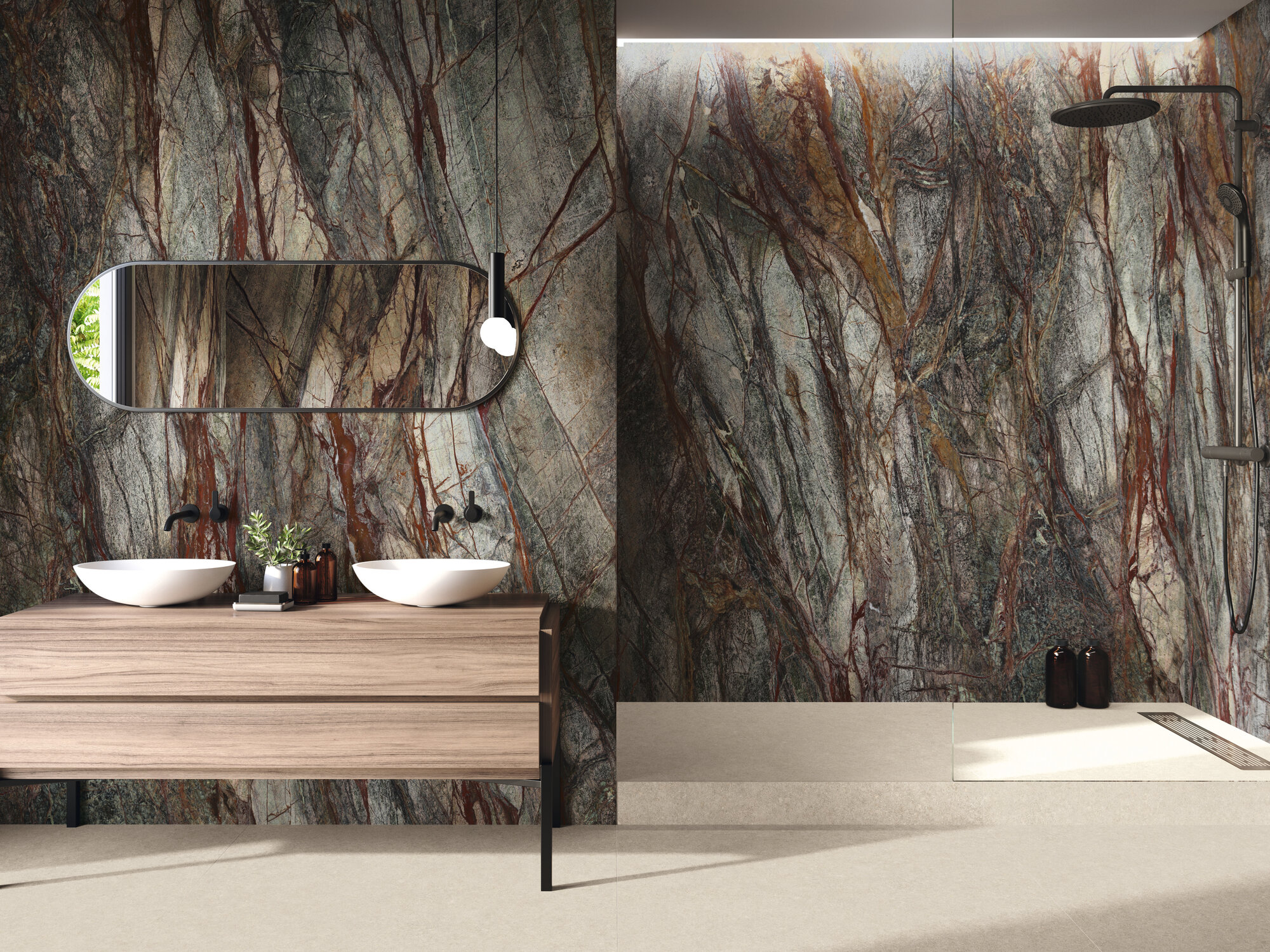
If there is one space where this material takes centre stage, it is the bathroom. Marble bathroom tiles create calm, elegant environments while guaranteeing durability against humidity. Light tones convey spaciousness in compact bathrooms; darker finishes add character to larger ones. A full-height marble shower wall, paired with warm wood or brushed black fittings, remains one of the most requested looks in current projects.
Marble also works at the other end of the scale. Marble mosaic tiles bring rhythm to shower floors and niches, and the marble subway tile gives the classic metro format a noble twist for kitchen walls and splashbacks. A slender piece laid vertically can stretch the height of a small bathroom while keeping the material’s elegance.
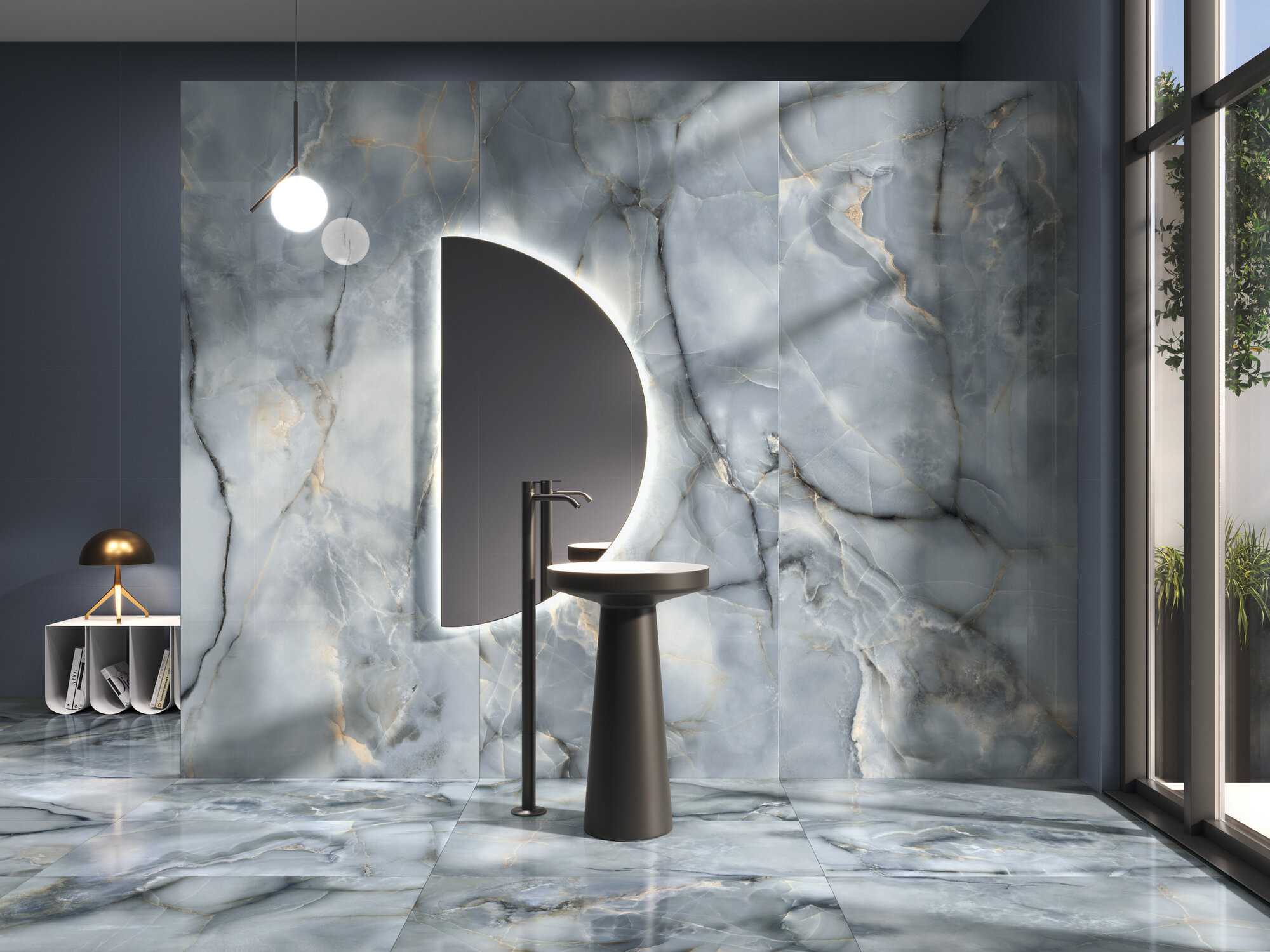
For projects that want to go one step further, onyx tiles offer the most dramatic reading of natural stone: translucent bands of colour that turn a wall into a backdrop. The Onice collection interprets this effect in porcelain, with pieces like its Blue Onyx that need very little around them to carry a whole room.
Quite the opposite. Marble is one of the few finishes that survives every trend cycle; what changes is how it is used. Right now the movement is towards larger formats, matt finishes and bolder colours like green and black, rather than away from marble itself.
Polished maximises light and depth, ideal for bathrooms and formal spaces. Matt is more forgiving with daily use and fits contemporary projects. Many designers combine both: matt on the floor, polished on the feature wall.
In their porcelain version, no. Unlike natural stone, they need no sealing, tolerate ordinary cleaners and do not stain. A damp cloth solves almost everything.
Choosing marble tiles is an investment in design that does not expire. With whites like Arabescato and Michelangelo, greys like Alexandria, greens, blacks and the onyx effect of Onice, the range today is wider than the quarries themselves. Explore the marble collections and find the veining that suits your project.




 Return